mousetrappling: Photo of me wearing tinsel as a feather boa (Default)
[personal profile] mousetrappling

Books

  • “Eyes of the Void” Adrian Tchaikovsky
    Finished Wednesday 15 April 2026. Continues on from “Shards of Earth”, and is still very much reminding me of The Expanse in that there is a vast external threat, so everyone is bickering amongst themselves and ignoring the threat. In fact going so far as to kick off actual wars rather than focus on said threat. There’s a lot in this about ownership, particularly ownership of people (in the broad sense of people), and about how sometimes the deal you make in desperation can have costs that you might find worse than the situation it got you out of. And about consent and agency more generally, can you really consent if your culture puts huge weight on doing what society needs of you regardless of personal preference? What about if you don’t know the costs going in, what then? I don’t know where the next book in the series is going, but I’m pretty sure it won’t be what seems inevitable at this point (genocide would be very thematically at odds with the rest of the series so far).
  • “Understanding Early Civilizations” Bruce G. Trigger
    Chapter 3 looks at the question of what counts as an “early civilisation”. Trigger goes through some other definitional attempts, in order to point out that providing a checklist doesn’t work – for instance some previous definitions rule out the ancient Egyptians which would seem ridiculous. Trigger’s preferred framework is that the key point is that an early civilisation has replaced social organisation on the basis of kinship with social organisation on the basis of class. That doesn’t mean kinship has gone away, nor does it mean that there were no classes before, but the primary organising criteria has changed – my brother has an in with the king might get you a better elite job, but you’ll still be part of the ruling elite even if your family isn’t best buddies with the royals. I’m partway through the bit where he’s talking about what separates an early civilisation from a later pre-industrial civilisation. He’s talked about money of some sort becoming the way you measure wealth, and also talked about even more complexity in social organisation. And about a switch from the early civilisation where the nature/society/supernatural realms are all one thing conceptually (which lets the king be a divine intermediary with divinities that are part of nature, whilst still being a man), to a later separation of that conglomerate into three separate spheres (so the king is now clearly a man, but might be divinely anointed or protected, and the divinity that does this is not a part of nature).

Podcasts

  • The Rest is Politics US
    • The blockading of the strait (which the guest standing in for Katty Kay approved of as a way of putting economic pressure on Iran, whilst disapproving of the entire rest of the war & the way it has been conducted), plus Trump taking on the Pope & pissing off millions of voters.
    • The way the US economy is looking good if you’re an investor and utterly terrible if you are not, and what that means about the way the markets are responding to Trump’s Iran war (after all, volatility means you get more chances to buy low & sell high). And just how out of touch Trump & his administration are, and how little they care.
    • The Iran war is all that there is to talk about … the subject mostly about how to get out and whether the Trump administration is capable of getting out. And they did actually talk about other things namely the way the people in the top jobs of Trump’s administration are incompetent, in light of recent allegations about the head of the FBI routinely getting so drunk that his security detail bring along equipment to force entry into his room in case they can’t wake him.
  • Talk 90s to Me
    Leonardo DiCaprio.
  • The Rest is Politics
    • Much boggling over the idea that negotiations might only take 21 hours (which isn’t long enough to finish the initial throat clearings) and quite a bit of chat about the Zelensky interview that I haven’t got to listening to yet.
    • Question time talked about the Hungarian election as its main topic.
    • A brief extra on the new revelations of the Mandelson affair, it’s been revealed he failed his security vetting before being made ambassador to the US, but that was over-ruled. Neither Rory nor Alastair were impressed by the idea that Starmer didn’t know till this week (either he’s lying when he says that or isn’t competent, was the gist of it).
  • Empire
    • a break in their Mao series to return to talking about Iran, an overview of the now three Supreme Leaders and talk about what the outbreak of war would mean for Iran (this was recorded around a month ago).
    • an episode about Lebanon, Hezbollah & Israel, where the guest is a woman who lives in Beirut near where the Israelis were striking initially (but she’d moved out to an airbnb elsewhere as her dog is scared of the bombing).
    • an episode about the Iran conflict with a guest who is part of the Iranian diaspora, having left in her late teens after the revolution.
  • The History of Egypt
    Retelling a story about Khaemwaset that we have from a Ptolemaic text, which is a fairytale about him finding a book with knowledge from the gods and this nearly bringing ruin to him until he comes to his senses and returns the book to where he found it. The film The Mummy had this as part of its inspiration.
  • The Rest is Science
    • Cognitive ghosts, all the weird ways our minds demonstrate they don’t work the way we think they do, like deja vu, or the way it can feel like you’re going to jump off if you’re high up near an edge (your brain notes you’re scared and confabulates a reason why you’re so scared when it’s not that scary), or how there are people who have brain damage that means that they are blind but still process vision then act on it unconsciously (then confabulate stories for why they did whatever).
    • a Q&A episode, also with some of Michael’s favourite science books. Included a discussion of the optimal way to open the windows in a car to blow air through while you’re driving (front driver’s side a little bit & the one diagonally opposite).
  • Oh God What Now
    • Their guest was Peter Chappell who has just published a book that games out what might happen if Reform wins (based on what they say they’ll do, and what he predicts would be the results of this).
    • quite a bit on the Mandelson scandal (essentially whilst it’s perfect believable that Starmer didn’t know Mandelson had failed his vetting that says nothing good about Starmer’s operation), plus their guest was the author of a book about the completely fictitious Report from Iron Mountain which is now underpinning the rightwing US conspiracy theories of today.
  • The Bunker
    • An episode about the history of (not using) the atomic bomb.
    • Weekly Wrap Up, a bit about the local election campaigning where Labour are leaning in to Reform’s poor track record on “women’s issues”, but also some on Trump v. the Pope & on the Iran war.
    • an episode about Muskism, with the authors of a book on that subject – essentially he seems to think that everything in society, politics etc is downstream of the computer, so controlling the computer means you can shape everything else.
    • an interview with the author of a new history of Europe, his key thing is treating Europe as a cohesive whole even if it’s been politically fragmented, there is a sense of shared values across the whole continent over the last few hundred years & there’ve been multiple attempts to create some sort of unified Europe.
    • Start the Week, the Mandelson scandal again, plus a bit more on the Iran war.
  • The History of Byzantium
    The legends that grew up around the death of the last Roman Emperor – Arthur-ish tales of how he would come back and restore Constantinople.
  • The History of England Shedcasts
    Another episode where Crowther talks to friends about objects that are quintessentially English (different friends to the one on the main podcast feed, different objects too).
  • More Jam Tomorrow
    British Guyana, and the way it gained independence (less violence here than other similar stories but a lot of rigged elections after the first guy elected had strong communist sympathies).
  • The History of China
    The Opium War moving into a new phase where the British man in charge is much more enthusiastic about the war than his predecessor, and is also encouraged to hurry it up as Britain as a whole is distracted by the disaster in Afghanistan. The treaty that is eventually signed makes no mention of opium despite that being the trigger point, and the two sides have drastically different views of what was actually agreed.
  • Origin Story
    The story of the General Strike of 1926, which I had heard of but it turned out I knew very little about it – not actually successful unlike what I’d assumed (the TUC called it off and capitulated before it fell apart but it wasn’t clear to everyone it would fall apart), and actually seemed to energise the fascists in Britain at that time.
  • The History of Philosophy
    Malebranche’s occasionalism, which is the idea that the things we think are causal (fire causes burning) are just occasional causes and it’s actually God that causes everything, which has previously been discussed in the episodes on Islamic Golden Age philosophy as it was a core part of some of their ideas too.
  • Journey Through Time
    Wrapping up their series on McCarthyism and looking at how there is a direct link to the politics of today – Roy Cohn worked with McCarthy during the Red Scare, and worked for & mentored Trump who very much operates by Cohn’s playbook.

TV

  • Art’s Most Horrific
    From gory bible stories, to mindfulness aides involving depictions of rotting corpses, to the brutal imagery of the First World War, to images of hell.
  • Rick Stein’s Australia
    Back to the coast, and back therefore to seafood and we won’t be trying the recipes from this one as they were either shellfish or whole fish. Quite a bit about sustainability & the difficulties of climate change.
  • Easter Island Origins
    Took us through the standard story (silly natives cut down all the trees to move their great statues then had infertile soil so population collapsed and now we have remnants of a lost civilisation) pointing out how it doesn’t match the evidence on the ground. Rehabilitated Thor Heyerdahl a bit, in that the genetics do show some influence from Columbia pre-arrival of the Europeans as well as the expected Polynesian ancestry, and also they demonstrated that the statues could in fact be walked upright from where they were you just needed to have the base shaped at the correct angle (like the ones found halfway to their destination). The deforestation is chalked up to the rats they brought with them – if you do slash & burn agriculture and then the rats eat the new growth then the forest doesn’t regenerate so eventually you run out of forest, but I wasn’t quite clear why this happened here but not wherever they brought their agriculture & rats from, perhaps it was just the difference in climate that tipped the balance.

Games

  • Diablo IV
    Had a longer break than intended, and likely won’t get the pet this season (there’s about a week left at time of posting). But we did blat through the capstone dungeon for Rank III, a bunch of Pits (up to Tier 22, could do 25 and open Torment II I reckon (J is more pessimistic)).

Exhibitions

  • Ramses and the Pharaoh’s Gold
    Exhibition of items from the Egyptian Museum in Cairo (mostly, some had accession numbers from there but were from Sharm el Sheikh or Saqqara museums). Ramesses II was the king they used as their narrative thread, but the exhibition also included a lot of Middle Kingdom jewellery and a lot of later coffins too. Plus some of the newly discovered animal mummies from Saqqara which felt a little shoehorned in but were neat to see (they include a lion cub and scarab beetles tho they only had boxes those were found in). Highlights for me included the falcon headed coffins of Sheshonq II (one silver, one which had been gold on cartonnage but the cartonnage had (mostly?) rotted so the gold leaf was reconstructed on a modern backing). Also they had the sarcophagus lid of Merenptah which was usurped by Psusennes I, which was rather well displayed with a mirror below it so you could see the image of Nut. There was also a rather fun ostraca with a drawing of a cat herding geese. Overall it was a well displayed exhibition, and when we went it wasn’t that busy so we could spend time looking closely at things. The labels were a bit on the brief side tho. We did the “VR experience” afterwards, which was kinda cheesy but also neat to see two places we’ve been (Abu Simbel & Nefertari’s tomb).

Bundle of Holding: Land of Eem

Apr. 20th, 2026 14:11
james_davis_nicoll: (Default)
[personal profile] james_davis_nicoll


A bundle for Land of Eem, the whimsical tabletop fantasy roleplaying game of colourful characters exploring the Mucklands from Star & Flame Games and Exalted Funeral.

Bundle of Holding: Land of Eem

The Four Emperors (Book Series)

Apr. 20th, 2026 10:58
selenak: (Claudius by Pixelbee)
[personal profile] selenak
Consisting of four different novels covering the "Year of the Four Emperors"; I had heard good things about these books, and reading Flavius Josephus with [personal profile] cahn finally made me check them out. These four novels cover the "Year of the Four Emperors", aka the time between the uprising against Nero and his suicide and the emergence of Vespasian as the final victor of a year long struggle for the rule of the Roman Empire during which three different candidates before Vespasian all rose and fell. These novels' most inspired narrative decision was to tell these events from the pov of the palace staff, slaves and freedmen (and -women) alike, so we have an ongoing set of characters, partly historical in origin, partly fictional, through whose eyes we see wannabe Emperors come and go.

The individual novels are: "Palatine" (Nero dies mid book already, because the rise and fall providing the red thread of the novel isn't his but of one of the two Praetorian Prefects, Nymphidius Sabinus, who is instrumental in Nero's downfall but then gets ideas before the agreed upon successor, Galba, even has arrived in Rome), "Galba's Men" (Galba finally shows up in Rome; it doesn't end well for him), "Otoh's Regret" (Otho finds out what being Emperor really means) and "Vitellius' Feast" (Vitellius manages to make Nero look good postumously). And while the Emperors on question do get narrative space - I think Otho gets the most, because he's already an important character in "Galba's Men" - , none of them is ever the main character - their rise and fall just provides the outward plot, while what the novels are really about is how this effects our main cast who occupies all variations between "just tries to survive this insanity"' and "is very ambitious themselves" , with "can't stand seeing things done incompetently" and "actually starts to believe it's important who is Emperor'" are featuring as motivations.

This bunch of main characters we follow through all the novels are: Epaphroditos (Nero's wily private secretary, freedman, started out as a boy slave in the Julian-Claudian household in the reign of Tiberius), Philo (Epaphroditos' assistant - "the private secretary's secretary" - , very competent and sweet natured, too sweet natured, in fact, for his own good), Artemina ("Mina", quick-tempered, starting out as a towel holder for Nero's Empress but determined to do very much more), Sporus (eunuch, Nero's favourite), Lysander (announcer) and Felix (head of slave placements and overseers), Teretia (daughter of Philo's landlady, in love with ihm) . There are others, female and male alike, who don't make it through all four novels or are introduced not in the first one but later, like Caenis, a freedwoman of the Imperial Household (and thus everyone's old acquaintance) showing up in "Otho's Regret" with very much an agenda of her own (and I have to say this is my favourite fictional depiction of Caenis yet, including Lindsay Davis' novel about her, which alas I felt was a bit of a let down mid novel onwards), or the moody teenager who is the younger son of Caenis' lover, one Domitian. ([personal profile] gelliaclodiana, you were looking for a depiction of Domitian where he's not a (present or future) psycho; this is it. He has teenage angst, but is clearly bright, and the sympathetic characters of the novel like him.) There are also those who for entirely non lethal reasons are just in one novel but noth another (not least because they wisely high tail it out of Rome when their survival demands it, like Nero's mistress of the wardrobe - and orgy choreographer - Calvia Crispinilla). As I said, some of these are actual historical figures (like Epaphroditos, Sporus or Caenis), others are fictional, but all of them have had the experience of powerlessness in the past even if they don't in the present, and that means the emotional stakes are there in a way they probably wouldn't be if we were just following the Emperors. For example: there are plenty of good reasons to depose Nero, of course. You don't fret for Nero himself. But then you realise the Praetorians taking the palace also means they're going to feel themselves entitled to have a go (i.e. rape) at Nero's slaves, and suddenly you care very much. Or: there is a famous incident involving the crowd when Galba arrives at the Milvian bridge. But Teretia and her father are within the crowd who has shown up to greet their new Emperor, which means said incident now feels incredibly personal. and so forth.

There is a lot of black humour in these books, and yet - or perhaps even because of that - the actual tragedies hit very hard. (I was reminded of the tv adaption of I, Claudius in this regard.) And for 99% of the characters three dimensional characterisations. (Including the Emperors. The only one who is just 100% awful is Vitellius.) The narrative premise that the palace staff is the one who actually keeps the Empire going irrespective of who happens to be Emperor also reminds me of British tv, though in this case Yes, Minister, but of course there is no slavery in 20th century Britain. And since most of the main cast are either former slaves or currently slaves, I was curious ahead of reading the books of how the author would treat the subject. For starters: not via the Spartacus approach (i.e. focusing on slaves fighting for their freedom). None of the characters think slavery per se is wrong; the freedmen (and -women) have slaves themselves. (This is historically accurate but quite often doesn't make it into fictional depictions.) There is also, early on, a lot of emotional identification with their masters' causes. At the same time, the narrative, I think, succeeds in making it clear that being a slave, even if your owner is the "considerate" type actually bothering to use your name instead of "boy" or "girl" , is to be in constant non stop danger of life and limb, simply because there is no legal protection whatsoever, and even if your current owner doesn't see themselves as entitled to have sex with you or beat you, the next one might, and/or any misfortune they suffer could lead to your own (painful) death. For all the banter and black humor, this undercurrent is there.

(I also thought the relationships between classes and free/unfree worked for me. For example, Epaphroditos and Nero. )

Nitpicks: the first two novels feature one of my pet peeves, to wit, characters using the expression "okay", even in initialized form (i.e. "ok"). I'm not a linguistic purist when it comes to historical novels, but that's one of the exceptions. So I was really glad novels 3 and 4 no longer had this.

Trigger warnings: did I mention the main characters are either former or present slaves in a society where the idea of consent for anyone not a freeborn Roman man is non existent? I will say that explicit scenes in the sense that we get detailed descriptions are rare, not because they don't happen but because the author usually works via implication and/or showing the aftermath.

State of the history: While Suetonius and Tacitus are clearly the main sources here, I would say the novels take the current state of historical research into account. I.e. Nero may be loathed by the Senate and increasingly by the higher ranking military, but he's wildly popular with the masses (and not responsible for the Great Fire of Rome), Domitian does not spend his spare time as a moody teen killing flies to signal the future. The big twist of Otho's life - which is spoilery ) is build up to through two novels. I wll say that in addition to the above mentioned "OK" in the first two novels, I am thrown by some of the very Anglophone shortening of names (hence Mina, or Alex for Alexander), but the slave names themselves, where invented, strike me as plausible (mostly Greek, which is what the Romans liked to do), and the various celebrations of Roman festivals, not just the well known ones like the Saturnalia, to mark the year are a good way to get some exposition about Roman every day life across. Notably NOT catering for what's popular is the fact that is no gladiator among either the main or the supporting cast. I found that ever so refreshing.

In conclusion: an enjoyable series of novels set during a truly outrageously bizarre year of Roman history.
selenak: (Claudia and Elizabeth by Tinny)
[personal profile] selenak
The Testaments 1.04: again, my only nitpick with this wasn't about the episode itself but solely source material related, as in, my favourite element of the source material is still not in it. As an episode buildng on the first three, it's tops, acting and script wise, continues to flesh out the two woman characters, heightens the stakes, and does, in fact, a better job with one of them than the book did. (I thought this in the first three eps as well.) I'm also intrigued by some of the chances due to what they could mean long term. Spoilers beneath the cut. )


For All Mankind 5.04: In which we get introduced to a new cast member and learn an old acquaintance is on their way. Also: (some) answers about the latest dastardly scheme.

Spoilers wait with their reveals until after mission launch )

Mission of Gravity by Hal Clement

Apr. 19th, 2026 08:51
james_davis_nicoll: (Default)
[personal profile] james_davis_nicoll


A stalwart trader sets out to recover a lost probe on behalf of feeble space giants.

Mission of Gravity by Hal Clement

Authority, by Jeff Vandermeer

Apr. 18th, 2026 10:13
rachelmanija: (Books: old)
[personal profile] rachelmanija


This sequel to Annihilation takes an unusual approach. Rather than returning to Area X, almost the entire book takes place outside of it, focusing on the scientific/government agency, the Southern Reach, which has been sending expeditions into it.

Most of the book is bureaucratic shenanigans with creeping horror undertones. The main character, unsubtly nicknamed Control, is slowly losing his mind trying to figure out what the hell happened to his predecessor and why she kept a live plant feeding off a dead mouse in her desk drawer, what is up with the bizarre incantatory literal writings on the wall, and what's up with the biologist, who has seemingly returned from Area X but says she's not the biologist and asks to be called Ghost Bird. There's parts that are interesting but also a lot of office satire which is not really what I was looking for in this series.

About 80% in, the book took a turn that got me suddenly very interested.

Read more... )

I kind of want to know what happens next but I'm not sure Vandermeer is interested in giving readers what they want.
james_davis_nicoll: (Default)
[personal profile] james_davis_nicoll
Poll #34492 Books Received, April 11 — April 17
Open to: Registered Users, detailed results viewable to: All, participants: 37


Which of these look interesting?

View Answers

The Thrice-Bound Fool by Christopher Buehlman (Ocober 2026)
13 (35.1%)

The Slantwise Histories and Other Stories by Alix E. Harrow (October 2026)
22 (59.5%)

Nightcurse by Emma Hinds (October 2026)
4 (10.8%)

The Killing Spell by Shay Kauwe (April 2026)
10 (27.0%)

Claimed by the Orc King by Roxy Taylor (November 2026)
3 (8.1%)

Some other option (see comments)
1 (2.7%)

Cats!
27 (73.0%)

james_davis_nicoll: (Default)
[personal profile] james_davis_nicoll


Five books new to me. At least four are fantasy (the collection might be a mix of genres). At least one is part of a series.

Books Received, April 11 — April 17

Shabbat food

Apr. 17th, 2026 17:58
magid: (Default)
[personal profile] magid
This week I’m hosting a tiny Shabbat dinner (two guests) and lunch (one guest).

Today’s food prep:
  • challah
  • split pea soup with barley, carrots*, garlic, Impossible sausage, onion, tomato paste
  • sauted Baby Bella mushrooms for hummus
  • roasted Brussels sprouts
  • roasted beets* and rutabaga*
  • roasted zucchini, tomato, lemon, and onion
  • roasted garlic
  • salmon with minced preserved lemon and whole wheat panko
  • potato salad with dill, parsley, and chives*
  • improv peach crisp with rice flour, walnut meal, and buckwheat flour topping
  • ginger cake
  • green salad with cucumbers and sunflower seeds
  • beef stew/cholent with onions, tomato paste, diced lemon, diced lime, farro, chickpeas, and Vadavan seasoning

* locally sourced

The Measure, by Nikki Erlick

Apr. 17th, 2026 10:05
rachelmanija: (Books: old)
[personal profile] rachelmanija


One day every adult on Earth gets a box that contains a string that measures out the length of their life.

This premise seems designed in a lab to create a book to be read for book clubs, where everyone gets to discuss whether or not they'd open their box and how they'd react to a long or short string. It worked, too. And it is absolutely about the premise. Unfortunately, the book is bad: flat, dull, sappy, American in the worst possible way, and emotionally manipulative.

It follows multiple characters, all American, most New Yorkers, and all middle or upper class. Some get long strings. Some get short strings. The ones with short strings agonize over their short strings. The ones with long strings who are in relationships with people with short strings agonize over that.

One of them is black, a fact mentioned exactly once in the entire book, and one has a Hispanic name. One set is an old right-wing politician and his wife. But all of them have identical-sounding narrative voices. Other than the Hispanic-named dude, who is mostly concerned about job discrimination, and the politician, who just wants to exploit the issue, everyone is worried about having a relationship and children with someone who will die young/worried that they'll get dumped and not be able to have children because they'll die young.

Ultimately, isn't everything really about baaaaaabies? Shouldn't everyone have baaaaaaabies no matter what?

The book is so bland and flat. The strings are a metaphor for discrimination, as short stringers are discriminated against. It explores some other social issues, all extremely American like health insurance discrimination and mass shootings, but only peeks outside America for brief and stereotypical moments: North Korea mandates not opening the boxes, China mandates opening them, and in Italy hardly anyone opens their box because they already know what really matters: family. BARF FOREVER.

It was obvious going in that the origin of the boxes would never be explained, but no one even seemed curious about that. Once all adults have received them, they appear on your doorstep the night you turn 22. Video of this is fuzzy. No one parks themselves on the doorstep to see if they teleport in or what. No one has a paradigm-upending crisis over this absolute proof of God/aliens/time travel/magic/etc that the boxes represent. No one comes up with inventive ways to take advantage of the situation a la Death Note. No one is concerned that this proves predestination. No one wonders why they appeared now and what the motive of whoever put them there is.

The point that life is precious regardless of length is hammered in with a thousand sledgehammers, to the point where it felt like a bad self-help book in the form of a novel. The romances are flat and sappy. In the truly vomitous climax, someone pedals around on a bicycle with the stereo playing "Que Sera Sera" and it quotes the entire song.

It's only April but this will be hard to top as the worst book I read all year.

Nekropolis, by Maureen McHugh

Apr. 16th, 2026 10:38
rachelmanija: (Books: old)
[personal profile] rachelmanija


In a future Morocco, a young woman named Hariba with no prospects has herself jessed, a process which renders her loyal to whoever buys her, and sells herself as an indentured servant to a wealthy household. There she meets Akhmim, a harni - a genetically engineered human designed to be a perfect lover or companion. Hariba falls in love with him and runs away with him, but because she's jessed, she becomes extremely sick due to defying her loyalty implant.

Up until this point, the book had a compelling atmosphere a bit reminiscent of The Handmaid's Tale in that it explored the daily life of people living with very little agency in the home of someone who owns them. But once Hariba gets sick, she becomes completely sidelined from the story and basically lies in bed suffering for the entire middle part of the book, while the POV switches from Hariba and Akhmim to first her mother, then her friend - neither of whom are very interesting.

Read more... )

This is a well-written book with interesting issues that sags a lot in the middle portion when Hariba basically drops out of the story, and ends in a note of depression and gloom.

Though I didn't love this book, I'm sorry that McHugh doesn't seem to be writing novels anymore as I did quite like China Mountain Zhang and Mission Child.
james_davis_nicoll: (Default)
[personal profile] james_davis_nicoll


Did Miriam Seabrook die of natural causes or was she murdered by her creepy coven? Witch Bast will find out.

Speak Daggers to Her (Bast, volume 1) by Rosemary Edghill
james_davis_nicoll: (Default)
[personal profile] james_davis_nicoll


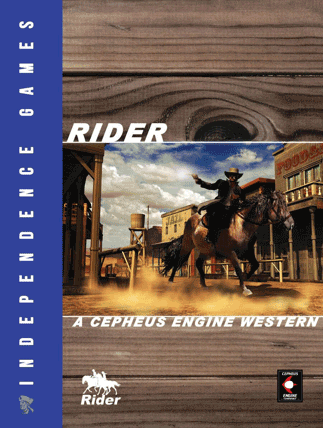
Core rules and supplements for the Liberi Gothica Games tabletop fantasy roleplaying game of heroism against world-shattering odds, Fellowship.

Bundle of Holding: Fellowship (from 2020)

Dreadnought, by April Daniels

Apr. 15th, 2026 11:00
rachelmanija: (Default)
[personal profile] rachelmanija


Danny is a 15-year-old closeted trans girl in a world where superheroes are real. She's across town from her home and her transphobic abusive father, hiding in an alley and painting her toenails with polish bought in a shop as far from her home as she can manage, when America's strongest superhero, Dreadnought, gets in a fight with a supervillain, crashes at her feet, and passes on his powers to her, since she's the only one there to receive them, before dying.

His powers automatically reshape her body into her mental ideal. So now she's physically a very pretty, very strong girl with superpowers... who now has to explain this to her abusive transphobic parents, everyone at her school, and the local superheroes, one of whom is a TERF. Not to mention that the supervillain who killed Dreadnought is still out there...

This is basically exactly what it sounds like: a superhero origin story for persecuted trans teenagers. It's very earnest and has absolutely no subtext. My favorite parts were the bits where Danny gets her gender affirmed by new friends and a sympathetic superhero, which are genuinely very sweet, and when Danny finally proclaims herself the new Dreadnought, which is a great stand up and cheer moment . But overall, I'm too old to be its ideal reader.

Content notes: A LOT of transphobia and transphobic slurs.
james_davis_nicoll: (Default)
[personal profile] james_davis_nicoll


Reaching the Moon is one thing; trying to settle and survive there is another matter...

Five Stories About What Happens After We Get to the Moon
james_davis_nicoll: (Default)
[personal profile] james_davis_nicoll


Members of a literature club wrestle with adolescence, crushes, and the fact their high school principal would like them to not loudly declaim the spicy passages from great works of literature.

O Maidens in Your Savage Season, volume 1 by Mari Okada & Nao Emoto

Book Cull Reviews

Apr. 14th, 2026 13:30
rachelmanija: (Books: old)
[personal profile] rachelmanija
As you may have guessed, I completely failed to live up to my goal of reviewing everything I read, even in brief. Rather than attempting to catch up to my backlog, I am re-starting from where I am.

Yesterday I did a quick book cull by pulling books off my shelves that have been sitting there for ages, reading the first couple chapters, and deciding if I was likely to continue. I focused on books I'd started before and not gotten very far into. Here are the books that landed in the "move to Paper & Clay's used section" bag.

Trouble and Her Friends, by Melissa Scott


See the new cover? If you've been wanting to read this, it's now available as an ebook!

This is a classic lesbian cyberpunk novel that I have tried to read at least three times, and never managed to get very far into. I kept putting it back on the shelf because it's a classic and probably objectively good, but I'm just not that into cyberpunk. If a lot of the action is taking place online, I tend to lose interest. Also, some books just don't grab me, due to a mismatch between me and the book, rather than being objectively or even subjectively bad. This is clearly one of them. Someone else can be thrilled to find it at Paper & Clay, take it home, and enjoy it.

The Splinter in the Sky, by Kemi Ashling-Garcia


A tea specialist becomes a spy in a far-future colonized world! Unfortunately, this starts with a prologue which reads much like the infamous "trade war" crawl at the top of The Phantom Menace. Yes, I know that turned out to be prescient, but the problem was that it was written in a stultifying manner. The next couple chapters were much more lively, but also had a tendency to clunky exposition - some of which was pretty cool, to be fair. This was the second time I attempted this book, and had essentially the same reaction I did to Trouble and Her Friends - not bad, but not for me.

Furies of Calderon, by Jim Butcher


This has been described to me as "Pokemon in alternate ancient Rome," which sounds amazing. For at least the third time, it failed to grab me. I got about four chapters in and there's still no Pokemon. Someone else will like it more than me.

The Hum and the Shiver, by Alex Bledsoe


A race of people called the Tufa have lived amongst normal humans in Appalachia since the beginning of time. They can see ghosts, have music-based magic, etc. This opens with a Tufa woman very very clearly based on Jessica Lynch, who was a real-life American soldier who was wounded and captured in the US/Iraq war, returning from Iraq. I found this in poor taste. The general style also got on my nerves.

While doing this, I got sufficiently grabbed by the openings to keep reading and finish Maureen McHugh's Nekropolis, which hopefully I will actually review. I also returned Amitav Ghosh's Sea of Poppies and Tanya Huff's Sing the Four Quarters to the shelf.

A sadness: two MA colleges

Apr. 14th, 2026 13:46
magid: (Default)
[personal profile] magid
Hampshire College has announced that they’re closing at the end of the fall 2026 semester (Why in the middle of the academic year? I have no idea, but it seems really odd.).

https://www.cbsnews.com/boston/news/hampshire-college-closing-amherst-massachusetts/

I’ve never been there, but apparently it’s part of my emotional-geographical mental landscape anyway, given my need to post about it: so many years of listening to WFCR in the mornings, WBUR in the evenings growing up. (Apparently WFCR is just known now as the western MA NPR affiliate, not Five College Radio. And four starts with F, too.) This is yet another sadness in an already challenging time. I feel badly for the current students, and worse for the employees. Will the other four institutions in the five college area be hiring? What will happen to the campus? It won’t help the local businesses, either.

Closer to where I grew up, apparently Anna Maria College’s future is also shaky. I have a lot of the same questions, though presumably that not being definite gives people more time to plan?

https://www.cbsnews.com/boston/news/anna-maria-college-massachusetts-risk-of-closing/?intcid=CNR-02-0623
mousetrappling: Photo of me wearing tinsel as a feather boa (Default)
[personal profile] mousetrappling

Books

  • “Understanding Early Civilizations” Bruce G. Trigger
    Got to the end of chapter 2, where I’m taking a break. This was about comparative studies and how he’s used them in this work – for modern cultures you can do statistical analyses of factors across a decent sample size. So you can say things like cultures who feed themselves with a hunter/gatherer method don’t have hereditary monarchies with some degree of statistical significance. For early civilisations there aren’t many you can use so he can’t do as much stats. But he argues that if he can categorise his seven examples into a small number of types then the sample is probably large enough (but if they are all different then it definitely isn’t). Also discussed how he’s picking his examples, which are: Egypt, Mesopotamia, Shang Dynasty China, Classic Maya, Late Aztec, Inca, Yoruba/Benin. Basically there have to be both archaeology and historical records available as you can’t tell everything you need from only one source. So for some this means there’s a narrow window between Europeans starting to write about them & Europeans changing their cultures, but for others they wrote themselves so there’s a wider timespan. This requirement meant he hasn’t got a civilisation from the Indian subcontinent (which he’d like to have) because we can’t read the language of the people who lived in the Indus Valley. He’s also picked civilisations where he can argue that the culture has evolved in place with little outside influence.
  • “Eyes of the Void” Adrian Tchaikovsky
    Sequel to “Shards of Earth”, and picks up pretty much where that one ends and is still reminding me a lot of The Expanse books in flavour.

Podcasts

  • The History of China
    The Opium War continues to escalate from the initial skirmishes – first the Chinese bring in reinforcements but they get defeated, then the English reinforcements turn up and are much more effective.
  • The Bunker
    • An episode about the Iran war from about a month ago (I guess I didn’t notice the topic when it came up in the list). The take home then from the guest was that the thing that’s not been particularly noticed is that it’s already spreading regionally, and even tho that is noticed we’re still not talking really about what’s going on in Lebanon.
    • An episode about the actual currently existing AI harms that we should be worried about, using the then recent Grok creating illegal content fiasco as a jumping off point to think about the sorts of things that are already harmful.
    • Weekly Wrap Up. Which obviously covered the Iran war & the cease fire situation, but also covered Kanye West being kept out of the UK.
    • Start the Week – including the Orban defeat, but also more on the Iran war as well as some domestic politics.
  • Empire
    • episode 4 of the series about Mao, covering the first decade or so post the Communists taking over China right up to just before the Great Leap Forward.
    • an episode I’d missed putting on my playlist a little while ago – covering the historicity of Homer & talking about what we can & cannot glean from it.
  • The Rest is Politics
    • Rory Stewart replaced by Dominic Sandbrook this week, so a bit more leaning on history as that’s his thing. All about the Iran war, and recorded after Trump threatened genocide but before the ceasefire. Included some chat about Trump’s mental state, about if he’s fascist or not (Sandbrook still says no but does think other parts of the Trump regime are, like Miller).
    • Q&A, still with Dominic Sandbrook, talked about NATO, the World Cup, amongst other thing.
    • a short extra bit reacting to the news that Orban lost.
  • The Rest is Politics US
    • a livestream recorded just after the ceasefire was announced, so all about that.
    • More on the Iran war, talking about how fragile the cease fire seems, but suggesting it will hold so long as the Chinese want it to. Also talking about how the Democrats have done well in recent special elections, but mostly because the swing voters who hate everyone are more anti-Republican at the moment as the Republicans are in charge.
  • Oh God What Now
    • A bit on the Iran war, some on the rise of the Greens and some on the Kanye West fiasco.
    • Mostly covered the Orban defeat, talking about what it means for Hungary but also to Europe & to the far right groups who saw Orban as the leader to imitate.
  • The Rest is Science
    • a Q&A episode, but also a bit of a chance for Hannah to plug the series she’s just made for the BBC that we’re actually watching right now (so being a month out of date on these made it dovetail nicely), so a decent chunk of the episode discussing AI psychosis and how we’re all susceptible to at least a mild form of it.
  • The History of Philosophy in China
    An interview with an expert on the Zhuangzi to round off those episodes. Mostly a compare & contrast with Confucianism but also at the end a note on the similarities with Legalism.
  • Literature & History
    An episode covering the Hadiths.
  • History of England Shedcasts
    Part two of the history of duels, this one covered duels during their heyday and the slow dribbling out of the custom. I hadn’t realised the final death knell was really the First World War, so much death that courting it by duelling people seemed ridiculous.
  • The History of England
    An episode tying in with some nationwide project about objects that are quintessentially English, so Crowther & a friend talked about the 10 they’d pick (which included everything from Cadbury’s chocolate to the Putney Debates).
  • Journey Through Time
    The downfall of McCarthy, in large part precipitated by the fact he wasn’t good in the new age of TV – his ability to manipulate how the print press reported on him didn’t help when the hearings began to be televised.
  • The Rest is Politics Leading
    An interview with the Prime Minister of Spain.

TV

  • Hunt for the Oldest DNA
    A programme about a project that eventually sequenced DNA fragments from a soil/sediment sample that was over 2 million years old and provided an vision of what the ecosystem was at the time. A story of breakthroughs (first this guy had shown that you could get DNA from dirt at all, then subsequently pushed it back beyond the 1 million year old mark), but also it sounded like his insistence on chasing this had driven several PhD students out of science as they’d been assigned the project then failed to get anywhere with it.
  • AI Confidential with Hannah Fry
    • This episode had a couple of examples of the ways that driverless cars have gone wrong – a crash where a self driving Uber killed a pedestrian whilst it was being tested, and a crash where a Tesla failed to stop at a stop sign, failed to turn a corner and drove straight off the road into a parked car killing one of the occupants. Fry made the point that developing new tech comes with mistakes, but that this class of mistake was avoidable and the companies should bear a significant amount of responsibility for the accidents – in the Uber case the car hadn’t been trained to recognise pedestrians who weren’t on pavements or crosswalks and also didn’t track or take evasive action when it didn’t know what an object was, so how was that remotely ready for real roads. And in the Tesla case it just didn’t do the sorts of things that the advertising said it would, so the logs show it recognised all the things it needed to recognise but didn’t do anything (and the driver was distracted looking for his phone that he’d dropped coz he thought the car capable of driving itself).
    • The final episode used the killing of the United Healthcare CEO as the jumping off point to talk about the use of AI algorithms in healthcare (but with nods to the wider use). The specific one that seems to’ve triggered the murder (or at least that everyone talks about as the thing the United Healthcare do wrong) is there’s an algorithm that United Healthcare use to determine when people get discharged from hospital – and there’s little to no flexibility so if you’re not well enough you get kicked out not well enough (and it’s systematically recommending discharge dates earlier than the patient is well enough). Fry also talked to someone with a startup that lets you select among IVF embryos for the “best” ones by sequencing the whole genome of the embryo then using AI to predict things like disease risks, but also eye colour, height, IQ. He was unconvincingly anti eugenics.
  • Art’s Most …
    A series on art presented by Waldemar Januszczak, each episode of which is Art’s Most something, and this first one was Art’s Most Erotic. Covered a pretty wide-ranging selection of explicit art from prehistory through Pompeii, India, Japan, France & England. Some of which was spiritual or about love, some of which was very much not.
  • Rick Stein’s Australia
    Episode 5 was another inland one, in an area between two rivers so nice & fertile for farming – settled mostly by Italians (at least in the places he visited). Most entertaining section wasn’t Italians, it was on an emu farm, where the emu chicks were a bit over-friendly. Nice sounding beef ragu recipe to try.
  • The Roman Empire by Train
    This episode covered some of northern Italy (Parma, Turin) and Nimes in France. We’ve been to Turin, about 13 years ago, so it was kinda neat to see bits of the place that we recognised (as well as a bunch of stuff we didn’t as we were there to see the Egyptian Museum).

Music

  • “Don’t Bore Us, Get to the Chorus” Roxette
  • “Scissor Sisters” Scissor Sisters

Talks

  • “Coffins as Magical Machines: Visualizing Ancient Egyptian Funerary Texts in 3D” Rita Lucarelli
    This wasn’t quite what I expected – more about the way she’s using 3D models & VR to bring the study of the texts to life, than about the texts themselves. This is in part a pedagogical exercise – involving students in creating the models, so they photograph & measure the object, and add the annotations to the model or translate the texts. All of which makes them engage with the object & all the knowledge we have about it. It’s also a way of bringing all this information to a wider audience (there’s a website https://www.ocf.berkeley.edu/~bookofthedead/ ). And it’s a way of investigating how the texts worked in practice rather than analysing them solely based on looking at the text in isolation.
james_davis_nicoll: (Default)
[personal profile] james_davis_nicoll


A transformed holy servant sets out to save a cub, only to get caught up in a war against the heavens.

The Sleepless (Sleepless, volume 1) by Jen Williams

Yesteryear, by Caro Claire Burke

Apr. 13th, 2026 11:35
rachelmanija: (Books: old)
[personal profile] rachelmanija


Natalie is a wildly successful trad wife influencer. She and her husband Caleb have a farm and six adorable children, and Natalie has parlayed carefully edited clips of her perfect life into a lucrative career. (She leaves out the two nannies, 30 farm hands, and the fact that Sassafras the cow is actually four sequential cows, replaced every time one dies, like goldfish.)

Then Natalie suffers a mysterious fall from grace. And then she finds herself in what appears to be an alternate version of her own life in the 1800s, with a husband very similar but not quite identical to her original husband, and children who claim to be her own. Has she time traveled? Is she delusional? Has she gotten kidnapped into a non-consensual reality show?

This is an extremely interesting novel that makes a good companion to Saratoga Schrader's Trad Wife. The beginning of the book is extremely similar, though Natalie is much more successful than Camille. Burke's version of a trad wife influencer deluding herself and lying to her followers about her supposedly perfect life is much better-written than Schrader's. But that's a double-edged sword, because it makes Natalie much more unlikable. She's an incredibly hatable character and the book is from her POV, and that makes a lot of the book not really enjoyable to read.

But the book turns out to be much more ambitious and clever than it seems at the beginning. When I finished it, I was glad I'd read it and appreciated it a lot. That being said, I enjoyed Trad Wife more on an emotional level.

I highly recommend not clicking on the cut unless you're 100% positive you'll never read the book. I really enjoyed the non-spoiled experience.

Read more... )

Content notes: Domestic violence, rape (on-page, graphic), child abuse and neglect, farm animal neglect/poor caretaking (just mentioned), gaslighting, non-consensual drugging, current American right-wing stuff.

While attempting to buy Saratoga Schaefer's Trad Wife, I accidentally bought a different novel called Trad Wife by Michelle Brandon. And Sarah Langan is coming out with yet another book called Trad Wife in September. I am now on a mission to read all four trad wife books, to compare and contrast.
james_davis_nicoll: (Default)
[personal profile] james_davis_nicoll


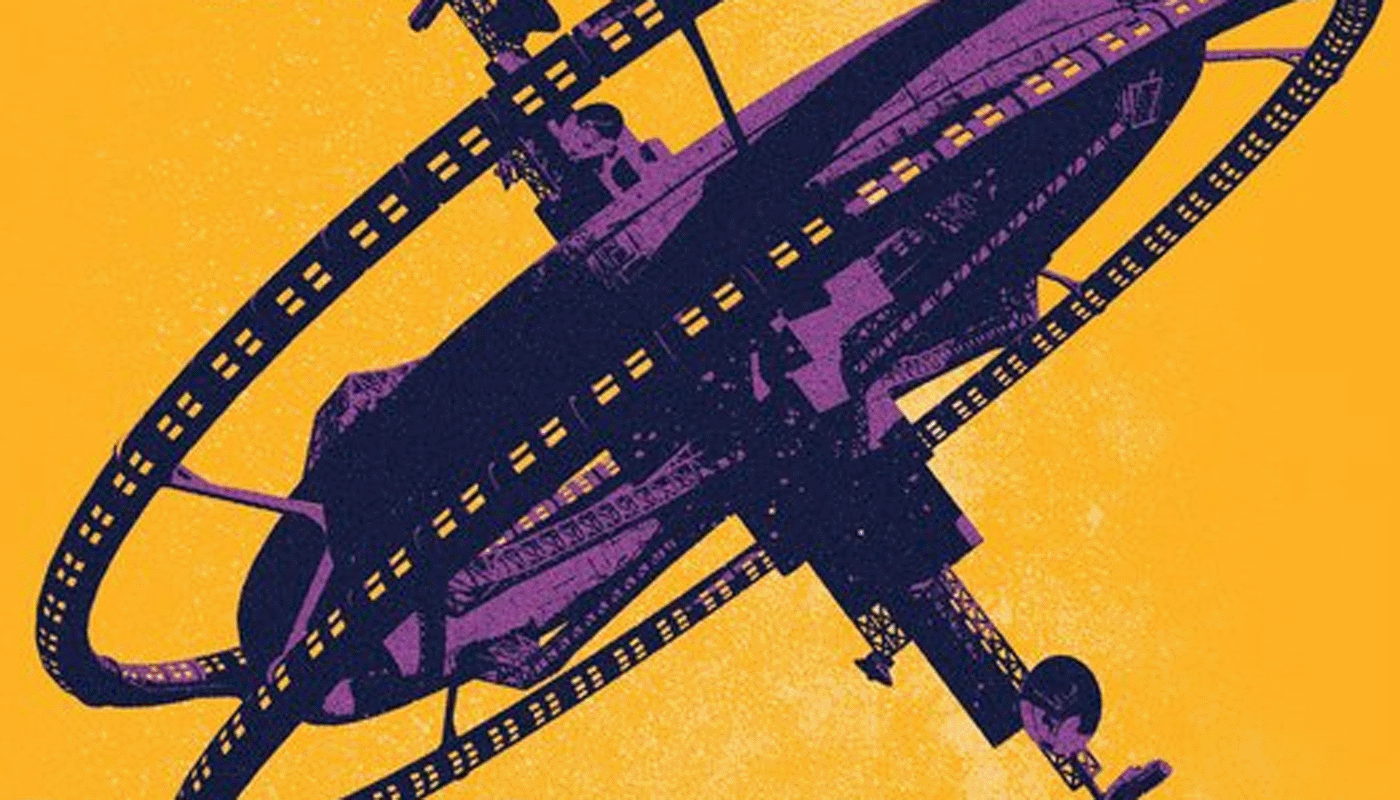
System-neutral GM tools for space roleplaying games.

Bundle of Holding: The Perilous Void

Jo Graham: The Autarch's Heir

Apr. 13th, 2026 18:20
selenak: (Illyria by Kathyh)
[personal profile] selenak
This week starts with some actual rl good news, as the foreunner of right wing autocrats on this continent, Victor Orban, was crushingly defeated. Among other things, this caused a lot of J.D. Vance memes going viral, given the Orange Menace had sent him to campaign for Orban; my favourite is the suggestion from one of our green politicians, Ricarda Lang, for Vance to campaign for the AFD next. This sounds like a great idea to me, except he already did that when speaking at the G7 last year, so maybe his magic touch fails over here.

On to fictional joy. I've read The Autarch's Heir, the fourth volume of Jo Graham's space opera saga The Calpurnian Wars (No.3 was reviewed by me here, and it is as compulsively readable as the previous entries. Though I have to admit I was half-wrong about the previous entry presenting us with the Space!Egypt to the Space!Rome that is the expansion-hungry Calpurnia), in that while the previous location definitely had Egyptian elements, so does Lono, the location of The Autarch's Heir. As before, while there are some characters from the previous cast around - in this case, sisters Aurore and Dian Melian - , we get new central characters to go with the new location, to wit, one Bel Alan, con man, and the drunk and depressed Calpurnian Commander Antisia, formerly the Faithful Lieutenant of murdered Autarch Julus, who has her own problems, such as one Thurinia gunning to be next Autarch, aided by her commander Vipsani. (I must admit that fond of ancient history as I am, I continue to get a kick out of the Roman paralles. In this case: what's not to love about Mark Antony as a Lesbian in space?) It's the first novel to give us something more about the Calpurnians than their expansionism, not just through Antisia's pov, and now I'll have to call them Space!Sparta as well because the way they're raised is definitely more in line with Sparta, transported into a sci fi frame, than with Rome. Anyway: the plot kicks off when Bel Alan, our main character, is contacted by the Lono resistance to steal the priceless Solaste Crown by pretending to be the natural son of the late Julus. At which point, and here I have to go for a spoiler cut, I did think: Spoilers made an assumption based on history. ) And yes indeed, it was. Bel makes for an engaging hero because he really isn't into either revenge scenarios or monarchy. He's also, a first for a main character in this series, not a believer. (I find this refreshing within this universe, not because I dislike the various numinous connections the other main characters in previous novels had, but in terms of world building we were due one atheistic sympathetic main character.) I also continue to love the way this series treats compassion and kindness and redeemability as important. Dian, one of the Melian sisters who in the previous novel was in what was probably my favourite scene in which Caralys, the heroine of said novel, was kind to her despite Dian having been hostile towards Caralys the entire novel. And now we see Dian more fleshed out and in a scenario where she in turn is able to show charm, wit and compassion - without negating the earlier issues. Not only is her sibling relationship with Aurore fun, but her hook up with Antisia is a great take on the "relationship started for utiliarian motives becomes meaningful" trope. (Btw, and speaking of Antisia: Here it gets spoilery again. ))

The one caveat I have is that while this novel tells its own story, I wouldn't start the series with it but start at the beginning if you're a new reader. (None of the novels are very long, so this doesn't mean years of your reading life, don't worry.) By now, I just think knowing the previous goings-on adds a lot of satisfying texture to what is already a very enjoyable story.
james_davis_nicoll: (Default)
[personal profile] james_davis_nicoll


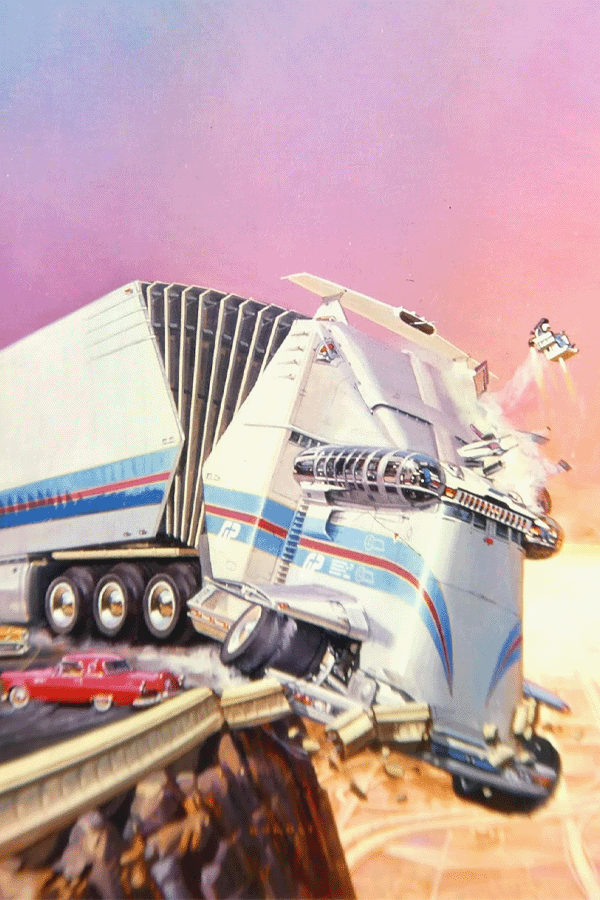
This is how we imagined humanity's first trip to the moon before Apollo 11...

Five Vintage SF Works About Travelling to the Moon
magid: (Default)
[personal profile] magid
Today I’d had the intent to finally put the Pesach kitchen away so I can start cooking, but that hasn’t happened (yet? Maybe posting this will get me to do it?). I was already underslept by a lot, and today’s must-do’s were emotionally raw. Read more... )

For all Mankind 5.03

Apr. 12th, 2026 17:27
selenak: (Spacewalk - Foundation)
[personal profile] selenak
In which there is added poignancy due to the sole good RL news these past ten days, i.e. the Artemis II moon mission, which I admit to following avidly.

Are you ready? )
[staff profile] denise posting in [site community profile] dw_maintenance

I keep forgetting to post about this: we've been troubleshooting the "missing notifications" problem for the past few days. (Well, I say "we", really I mean Mark and Robby; I'm just the amanuensis.) It's been one of those annoying loops of "find a logical explanation for what could be causing the problem, fix that thing, observe that the problem gets better for some people but doesn't go away completely, go back to step one and start again", sigh.

Mark is hauling out the heavy debugging ordinance to try to find the root cause. Once he's done building all the extra logging tools he needs, he'll comment to this entry. After he does, if you find a comment that should have gone to your inbox and sent an email notification but didn't, leave him a link to the comment that should have sent the notification, as long as the comment itself was made after Mark says he's collecting them. (I'd wait and post this after he gets the debug code in but I need to go to sleep and he's not sure how long it will take!)

We're sorry about the hassle! Irregular/sporadic issues like this are really hard to troubleshoot because it's impossible to know if they're fixed or if they're just not happening while you're looking. With luck, this will give us enough information to figure out the root cause for real this time.

james_davis_nicoll: (Default)
[personal profile] james_davis_nicoll


10 works new to me: five fantasy, and five science fiction, of which at least three are series (if magazines count as series). I have not see that high a fraction of SF in quite a while.

Books Received April 4 — April 10

Poll #34466 Books Received April 4 — April 10
Open to: Registered Users, detailed results viewable to: All, participants: 50


Which of these look interesting?

View Answers

Demonology for Overachievers by Lily Anderson (September 2026)
13 (26.0%)

All Hail Chaos by Sarah Rees Brennan (May 2026)
17 (34.0%)

The Faith of Beasts by James S. A. Corey (April 2026)
7 (14.0%)

FIYAH Literary Magazine Issue 38 published by FIYAH Literary Magazine (April 2026)
15 (30.0%)

House Haunters by KC Jones (October 2026)
8 (16.0%)

The Last Contract of Isako by Fonda Lee (May 2026)
18 (36.0%)

A Wall Is Also a Road by Annalee Newitz (October 2026)
25 (50.0%)

There Are No Giant Crabs in This Novel: A Novel of Giant Crabs by Jason Pargin (November 2026)
21 (42.0%)

A Kiss of Crimson Ash by Anuja Varghese (May 2026)
8 (16.0%)

Teddy Bears Never Die by Cho Yeeun (May 2026)
7 (14.0%)

Some other option (see comments)
1 (2.0%)

Cats!
36 (72.0%)

The Testaments (1.01 - 1.03

Apr. 10th, 2026 11:19
selenak: (Winn - nostalgia)
[personal profile] selenak
The first three episodes of The Testaments have been dropped in my part of the world on Disney +. It's an adapatation of Margaret Atwood's novel of the same name, which is a decades later written sequel to her famous dystopian classic The Handmaid's Tale; when it was published, I reviewed it here. Just to make their lives more complicated, though, the show is also a sequel to the tv series The Handmaid's Tale. The first (very good) season of which I watched, but not the later ones, as word of mouth about diminishing quality and lack of time have detained me, but I did osmose this presents a problem because not only is the backstory the showin its later seasons developed for one of the central characters (Aunt Lydia) very different from her backstory in the novel, but the timeline of another central character is different as well. With this in mind, my spoilery reaction to the first three episodes is beneath the cut. Above cut: those first three episodes are well acted and produced and make some interesting choices re: adapting the source material - and I don't mean "interesting" as a euphemism for bad -, but haven't revealed yet how they'll solve the Lydia problem.

The perils of being a female teenager in Gilead )

April 2026

S M T W T F S
   1234
56 7891011
1213 1415161718
1920 2122232425
2627282930  

Most Popular Tags

Page Summary

Style Credit

Expand Cut Tags

No cut tags
Page generated Apr. 21st, 2026 20:37
Powered by Dreamwidth Studios